
Australia’s Largest Coal-Fired Power Plant Extend for Another Two More Years
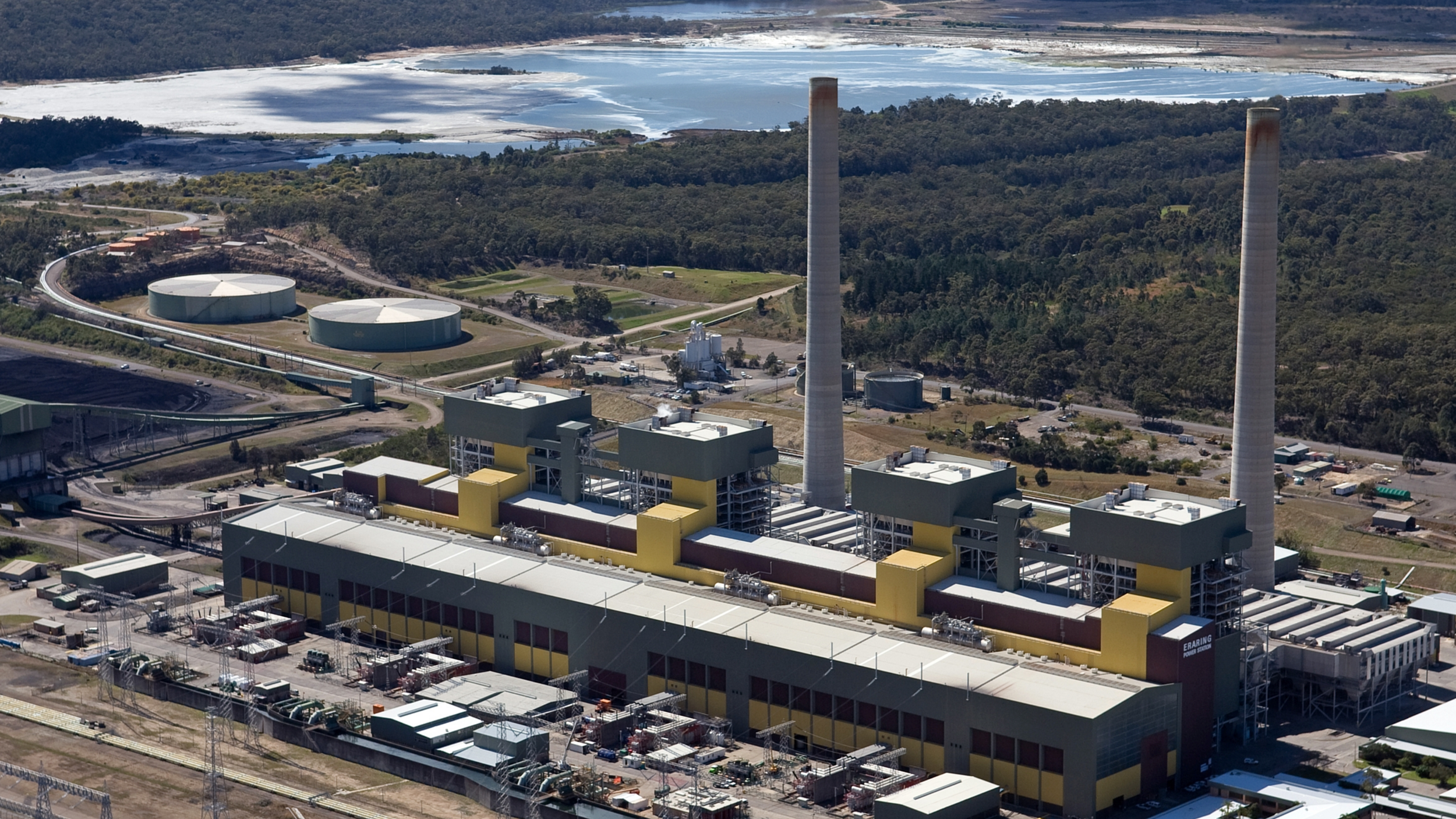
Eraring Power Station is Australia’s largest coal-fired power plant, producing 2,880MW per year | Image Credit: Wikipedia Commons, Nick Pitsas, CSIRO.
The planned closure of Australia’s largest coal-fired power plant, Eraring Power Station, has been delayed, again, by another two years until 2029, amid concerns over the national energy grid’s capacity to satisfy consumer electricity demand.
Origin Energy, the owner of the plant located in Lake Macquarie, New South Wales, had previously agreed with the NSW government to delay its original closure in 2025 to August 2027, due to increased tensions in demand and supply, as stipulated in its original 2025 agreement.
NSW Environment Minister, Penny Sharpe, said in a statement released Tuesday morning, “Origin’s decision gives certainty to workers, the market and energy consumers across the state, as well as contributing to NSW’s 2030 emissions reduction target,”
“My number one job is keeping the lights on and putting downward pressure on power prices,” she said.
The NSW Greens and other environmental organisations have labelled the move a “disaster for NSW and Australia’s climate targets”.
ERARING TO CLOSE IN 2029
Image Credit: Canva
This decision follows the release of the Australian Energy Market Operator’s ‘Transition Plan for System Security’ annual report, released December 2025, which warned of "strength deficits”, or shortfalls, for the NSW energy grid during the 2027-28 financial year if Eraring was retired.
The report found that unless measures, such as increased renewable procurement were taken to stabilise the grid, the potential energy shortfalls would lead to heightened risk of blackouts and operational rollout difficulties.
Ms Sharpe maintained Eraring would close in 2029, saying current energy security projections showed NSW would have sufficient energy supply through expanding renewable generation and storage coming online.
“Since the election, we have increased the amount of renewable energy capacity in operation by almost 70 per cent. That’s equivalent to Eraring’s capacity,” she said.
Origin Energy Chief Executive, Frank Calabria, said the decision to maintain Eraring would ‘provide more time for renewables, storage and transmission projects to be delivered’, however conceded “Eraring Power station will need to run for longer to support secure and stable power supply,” in a statement to the Australian Securities Exchange.
Eraring’s extension mirrors similar decisions in other states, including the Queensland government’s decision to extend the life of coal-fired plants until at least 2046, according to a new energy roadmap released in October 2025.
POTENTIAL ENVIRONMENTAL & HEALTH RISKS
The extension, despite being welcomed by the industry and mining unions, has received severe backlash from environmental groups and organisations, who argue the extension ‘will contribute to higher emissions’.
The NSW Greens decried the decision, calling it a “disaster for NSW and Australia’s climate targets”, with environmental spokesperson Abigail Boyd saying, “keeping any coal power station open longer is a cost-of-living and human health disaster.”
“Despite persistent warnings that NSW is already not on track to achieve our legislated climate targets, the NSW Labor government has been continuing its business as usual trajectory.”
Central Coast environmental advocacy group Future Sooner, said the environment and nearby residents were the “biggest losers” of Origin’s extension.
Gary Blaschke, president of Future Sooner, who also sits on the NSW Coal Ash and Health Community Advisory Committee, told the ABC that continuing Eraring’s operation presents supply and health risks to the community from coal ash pollution.
“So here we are putting another 50 per cent more coal on that ash dam over the next three years, and we don’t know whether it's capable of handling it or not,” he said.
However, the Mining and Energy Union welcomed the decision, saying the extra time gave the plant’s 500 workers more time to prepare for its eventual closure in 2029.
District President Robin Williams told ABC “it gives us the ability to continue to do work with the government. We need an orderly and just transition for those workers,” he said.
However, Mr Williams said he was “surprise[d]” by Origin’s decision not consult the union about the decision.
WIDER EMISSIONS IMPACT
Photo Credit: Canva
Energy experts say more coal-fired power plant operational extensions are likely in the interim, with the federal government currently falling behind on its emission and renewable energy targets.
Minister for Climate Change and Energy, Chris Bowen, argued the extension did not undermine the government’s current energy transition, saying “no one wants to see these coal-fired power stations open longer than they need to be or close earlier than expected”.
Grattan Institute energy and climate change senior fellow, Tony Wood, told The Australian that ‘people are getting nervous’, with the extension another indicator that the renewable rollout was not on track
“When Origin starts to talk about closing it, that’s because they think renewables would reduce the prices which cause coal plants to run into financial difficulties…What we are seeing here is that efforts to replace them with renewables [are] running into trouble” he said.
“We are not on track for [the] 2025 emissions reduction target, and we are not building the transmission lines fast enough to meet the renewable system due to higher costs and regulations.”
South Australia is currently on track to reduce its net greenhouse gas emissions by at least 60 per cent by 2030 and reach net zero by 2050.
A report by the Commonwealth Scientific and Industrial Research, or CSIRO, confirmed the state has already reduced its net emissions by 55 per cent compared to 2005 levels. with renewables already supplying 69.7 per cent of South Australia’s net energy generation in 2023-24.