
Politics Down Under: What is Democracy?
Australia, like most nations, is a ‘Democracy’, but what exactly does this mean? Why is Australia a Democracy? And what are the pros and cons to this?
Australia is a democracy in which the people have the freedom to elect members of the community to public office, enabling them to engage in lawmaking and implement government policies. The concept of democracy originates from the Ancient Greek political tradition of dēmokratía, meaning ‘rule by the people’. The purpose of democracy as a form of government is to empower members of the public—who have an interest in the issues of the day—to influence the political process. Whether this influence has always been exercised in the public interest is debatable, but the idea of democracy has gradually evolved over centuries to address the challenges arising from society’s evolution.
So, how exactly does democracy work in Australia? This article provides an educational perspective—covering the evolution of Australian democracy, how it functions today, and the advantages and disadvantages of this system. It will highlight the importance of democracy in Australia, especially as we approach this year’s federal election.
History of Australian Democracy
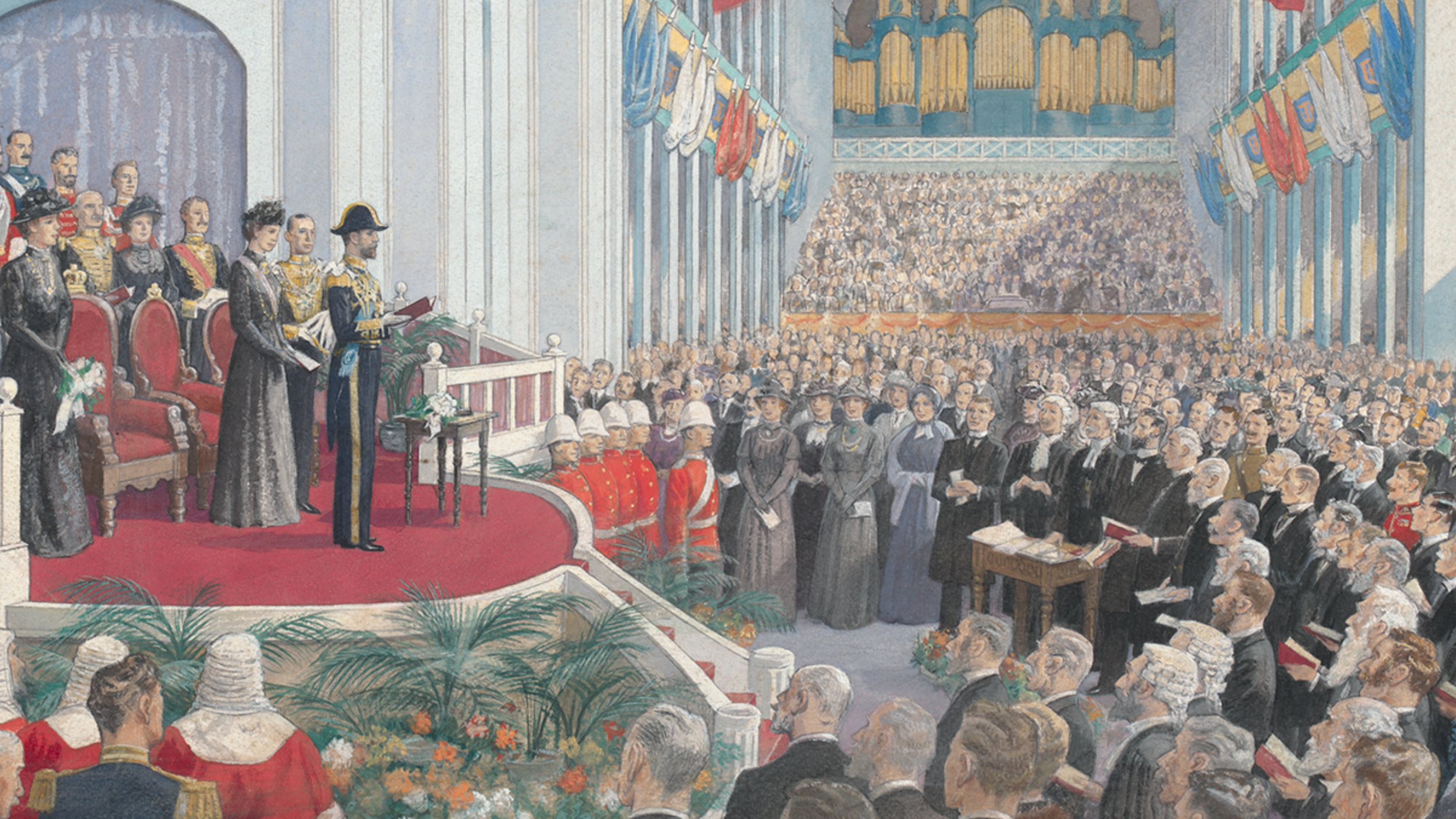
The federation of the Australian colonies on 1 January 1901, while establishing a democratic Commonwealth (federal) government, was not the beginning of democracy in Australia, which had already existed for decades.
During the 18th century, the United Kingdom sentenced prisoners to convict labour in the American colonies. This arrangement became difficult to maintain after the American War of Independence, so in 1788, British forces landed in Botany Bay, declaring Australia terra nullius (‘nobody’s land’) and instead diverting convicts to the new colony. Despite Indigenous Australians already living on the land, the British quickly established the colony of New South Wales, appointing Captain Arthur Phillip as its first governor.
New South Wales’ distance from London enabled governor Philip to exercise autocratic powers over the colony to encourage its development—essentially making early colonial Australia more akin to a military dictatorship than a democracy. However, despite the governor’s autocratic powers, Australia inherited English common law traditions, which laid the foundation for future democratic developments.
Democratic developments began to occur during the early to mid-19th century, with incremental steps weakening the governor’s power and leading to the formation of elected assemblies across the Australian colonies.
The New South Wales Act 1823, passed by the Imperial Parliament, transformed New South Wales from a de facto autocracy into a constitutional state. It also established a colonial parliament, or ‘legislative council,’ which gradually gained greater authority to create laws and, eventually, override those made by the governor. These developments were followed by substantial reforms in the 1850s, which saw multiple Australian colonies, including New South Wales, gain legislative, judicial, and even executive power from the United Kingdom.
Voting rights, originally limited to privileged members of society, were liberalised throughout the remainder of the 19th century. South Australia became a trailblazer in civic engagement—allowing both women and Indigenous people (turnout was restricted) to vote in colonial elections by 1896.
Due to the shifting geopolitical and economic environment by the end of the 19th century, the Australian colonies (except New Zealand, Fiji, and briefly Western Australia) federated to form a national government to manage the continent.
The passage of the Constitution of Australia in 1901 followed both American and British democratic traditions, shaping a system that was both liberal and representative of the people. This included the continuation of the Westminster system inherited from Britain, as well as electoral reforms influenced by the United States at the time.
Since Federation, this unique system has enabled Australian democracy to become a widely recognised global model, inspiring other nations in shaping their own forms of government. The secret ballot, pioneered by early colonial Australia, was adopted by the United Kingdom, United States, Canada and many others, who cited Australia’s success for their reasons for adopting.
How Democracy in Australia Works

One way to understand Australia’s democracy is by examining its core defining values—freedom of election, assembly, political participation, speech, expression and religious belief—which can be found in Australia’s evolving democratic norms.
One way to understand Australia’s democracy is by examining its core defining values—freedom of election, assembly, political participation, speech, expression, and religious belief—each of which aims to empower the public’s ability to influence public debate.
These principles are also underpinned by the concept that no one is above the law—known as the rule of law—as well as aspects of the United Nations Universal Declaration of Human Rights.
For democracy to function effectively, Australian society has evolved gradually over time to recognise certain qualities as essential for democratic social cohesion. These include respect for individuals and their right to make their own choices, tolerance of differences and opposing ideas, equity, political and social freedom in the pursuit of happiness, and procedural justice.
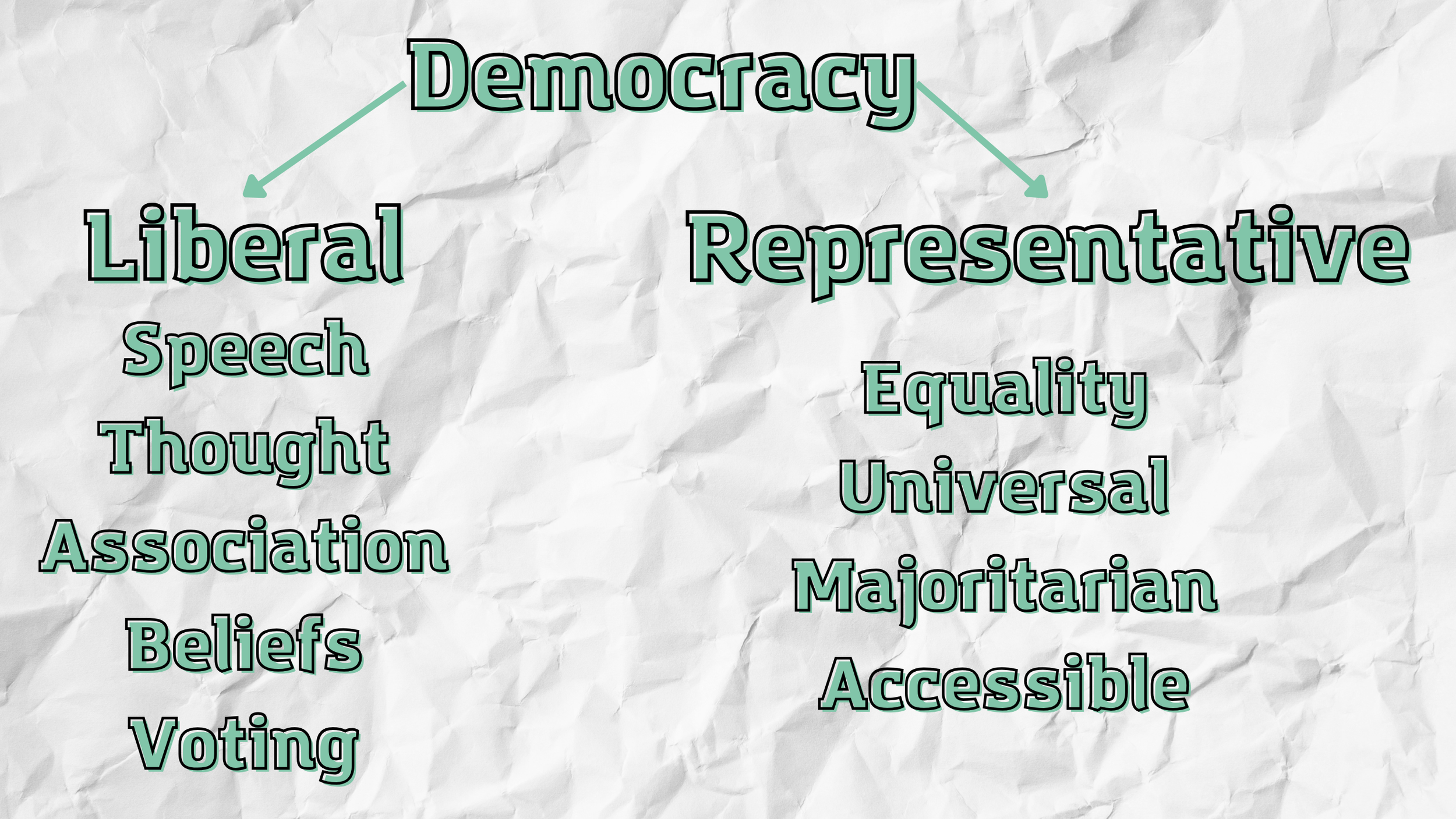
Australia is categorised as both a liberal and representative democracy. This categorisation highlights the extent to which democracy is applied in Australia to ensure it remains as representative and free as reasonably possible.
Australia’s liberal democracy means that our society values freedoms—including speech, association, political thought, worship, and, importantly, the ability to vote—as essential components of a free society.
Australia’s representative democracy, however, ensures that all Australians, regardless of their wealth, heritage, gender, faith, beliefs, or abilities, have an equal right to be represented in Parliament. This is critical to maintaining a legitimate government by the people, for the people.
The application of democracy across government ensures that power remains accountable and ultimately kept in check by the public.
Democracy operates across Australia’s three tiers of government—federal, state (and territory), and local—to ensure Australians always have a say in decisions that impact them.
For instance, the Federal Parliament is required to hold elections every three years, state parliaments every four years, and local governments also every four years. Referendums and plebiscites (non-binding votes) have also been used as tools to gauge public opinion, typically on controversial matters or to amend the Constitution of Australia to reflect changes in law.
In 2023, the Australian government exercised this power through the Voice to Parliament referendum, although the amendment was unsuccessful. However, in 2017, the government conducted a plebiscite on same-sex marriage, which received popular support and was later legislated as a result of the vote.
The Constitution of Australia, while not explicitly prescribing many core elements of liberal and representative democracy—only guaranteeing trial by jury and freedom of religion—has been interpreted to uphold the values necessary for democracy.
In both Australian Capital Television Pty Ltd v Commonwealth and Lange v ABC, the High Court ruled that for Parliament to be ‘chosen by the people’, the people must have some degree of freedom of political communication to participate in elections.
While the federal government reserves the right to regulate freedoms such as speech, constitutional conventions have generally limited this to reasonable restrictions concerning national security, discrimination, and defamation.
Advantages and Disadvantages

Democracy, like all other forms of government, is not a perfect system and comes with both advantages and disadvantages. However, as a whole, it remains superior to all that has come before it.
Australia’s democracy is inherited from English democratic traditions and has been guided by them ever since, bringing both benefits and challenges. It has succeeded in providing equal legal platforms for people to resolve their differences peacefully, respect for human dignity, freedom of speech, association, thought, and worship, equality before the law, socially cohesive communities, and a transparent and accountable government.
As a result, Australia currently ranks in the top 25% of countries for freedom of expression, according to the Global State of Democracy Framework.
At the same time, Australia’s democracy has been criticised for its inability to respond quickly or appropriately to issues affecting marginalised communities, government inefficiency, and rising populism.
These disadvantages include slow or ineffective decision-making on policies regarding housing, migration, and other domestic issues. Corruption and instability have also been significant concerns, particularly during the 2010s, when five consecutive Australian Prime Ministers were subjected to internal party coups.
Majority rule has faced heavy criticism from minority groups—especially Indigenous Australians—following the defeat of the Voice to Parliament referendum.
Finally, populism over expertise has become an increasing concern, with politicians prioritising public sentiment over realistic policy solutions.
Australian democracy has brought both advantages and disadvantages, but it has historically succeeded in gradually evolving to address the challenges facing society.
For democracy to function effectively, it is crucial that Australians—especially young Australians—understand its history, how it works, and its strengths and weaknesses. This knowledge enables its continued evolution to empower future generations.