
Interview Transcript: Behind the Scenes with Actor Connor Pullinger
Connor Pullinger, a local Adelaidean actor, is on the rise and Hub was lucky enough to sit down and pick his brain about the world of acting.
How did you get into acting?
I always did acting classes and performance classes since I was a kid. My sister and I both did it. Our parents sort of just threw us in anything to keep us busy and I really loved it. It was the only thing I properly loved at school. I then did this class called SAYarts outside of school, it was like youth arts for teenagers, and I loved it. I met good people, and I was like, “Wow, creative people are so much more fun to be around.” And then kind of crazily, these casting directors came to SAYarts because they were looking for teenagers for a TV show they were making and suddenly I started getting auditions for it all. I ended up getting a role on The Hunting which is a TV show. That's kind of when I realised that I could do it. I got really lucky and turns out it’s fun and everyone here is really nice and they’re making films and they’re decent people.
Then I went to uni for it because I got an agent and I was auditioning and wasn’t booking anything, so I thought let me learn how to be an actor while auditioning and then just see what happens. And then here we are.
I definitely think people who are creative need to be in the creative space. It’s just if you’re not, you’re going to be miserable. So how do you navigate finding work as an emerging actor?
I do quite a few auditions, but it’s all self-tapes. So, you set up the blue screen and do it and send it off and don’t hear anything back. So that’s kind of what I’m used to, but the good thing is, since finishing at Flinders University, I sort of haven’t stopped working. It’s November and I’ve had a job every month that is creative or acting-related, which is kind of crazy. And when I think, “How have I done that?” Probably just through networking honestly and being friends with people that want to make things. The good thing is when you work a lot, your films get shown in film festivals and the word of mouth is good and people watch it and go, “Oh, you can act. We get along and you can act, let’s make something.” Yeah, it kind of just happens one after the other. You can’t really plan it.
Yeah, the more you know people, the more work you get. So, what’s your favourite film you’ve worked on recently?
I love The Hitcher. I was so scared because I got into Made in SA (Adelaide Film Festival), and it was a great premiere. So many people were there. So many people who worked on it. It felt very fitting. But I hadn’t seen it until the first night. It was on the big screen and my whole body was terrified from the opening frame. And it finished and I went, “I think I liked that.” But I was like, “Was that half an hour, ten minutes, five minutes?” I kind of went out of body or whatever. And then I went to the second screening so I could watch it again on a clear mind and my friends came to that one. I’m really happy with it.
It looks pretty, too; the vision was there. I remember the little slideshow Henry (Director of The Hitcher) sent me with the audition stuff and he was like, “This is what we’re going for.” And I see, it’s there. I’m just really happy I got to be a part of the vision. And I think it’s just fun and it’s emotional and it’s the stuff I want to make. So I’m hoping it gets into some festivals interstate.
But I also really like Great Deliverance. It’s so awkward because I did them so close together and they’re both like my babies. The Hitcher had the big premiere so my heart’s with that but I’m excited for hopefully they both can go to festivals. And they’re very different vibes.
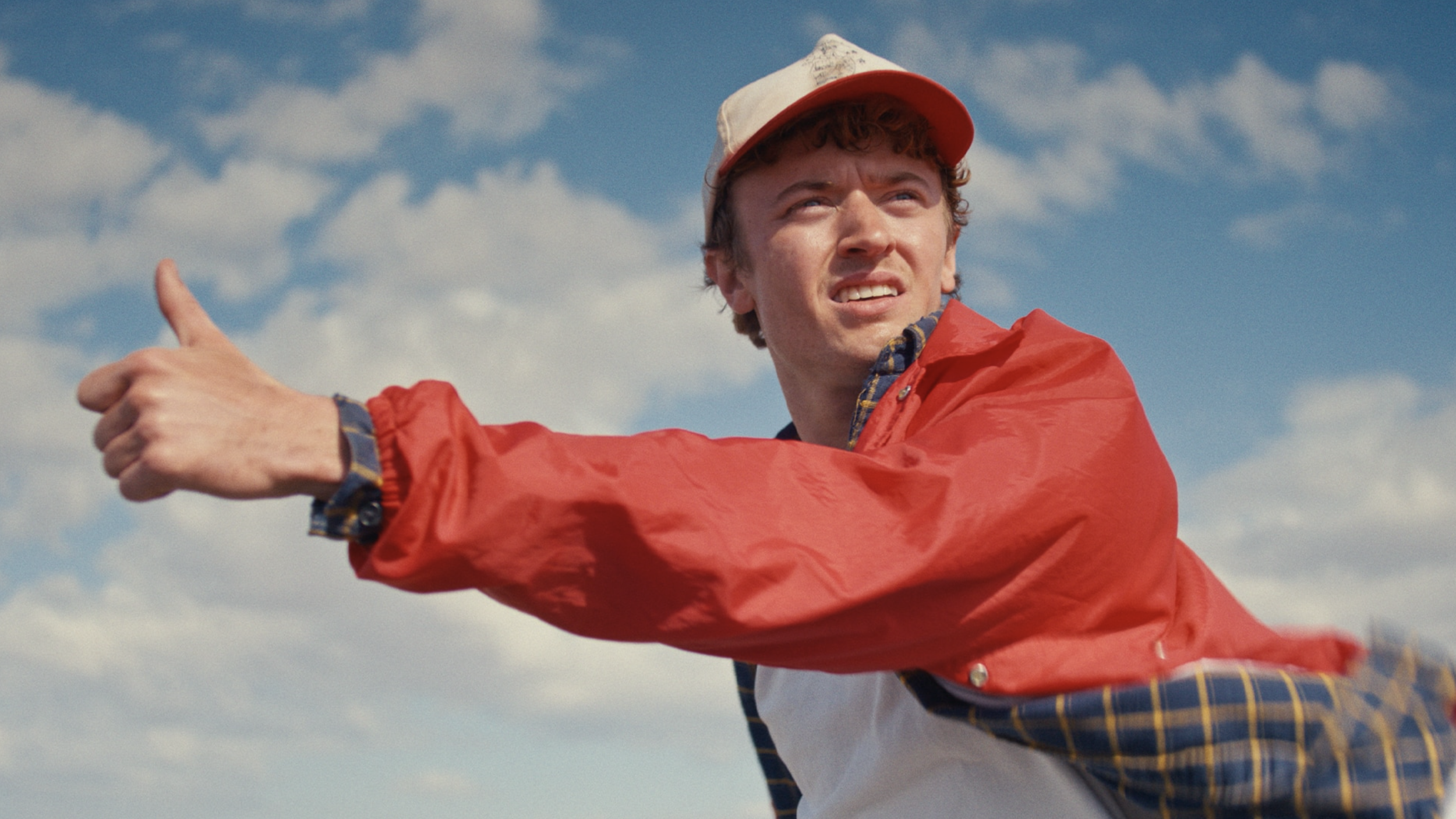
Connor Pullinger in The Hitcher
What drew you towards the role of The Hitcher?
I got a random message from the director, Henry, who was like, “Hey, we are applying to the Mercury Quicksilver funding thing.” And I was familiar with it, I had seen some of the films that had previously been made with Quicksilver funding and I was like, “Wow, these short films are great.” You know when they’ve got the money, everything looks so professional, right? Because I had only done really low budget shorts. So I got a message about auditioning and Henry sent me the script and I saw it and it was daunting because the Hitcher’s crying, the Hitcher’s dancing, but I really wanted to do it. I thought it was cool and a really unique idea, that I hadn’t seen anything quite like it in the style he was going for. And so I did an audition – I sent in a tape and then I never heard anything back for like a couple of months and I was like, “Oh I didn’t get it. Fine, I’ll go watch it and see who got it,” and be like, “I wish that was me.” And then I was sort of asking people who the Hitcher going to be because I knew lots of people who were in the crew, and they said it’s just about to start pre-production. And then luckily, I got asked for a call back and then got the part.
I was really stressed because a lot was going on at the time. I was like, I hope I’m not doing too much. Because even at the start of the year I got another Quicksilver film which is called Great Deliverance, directed by Guy Henderson, that has been submitted to festivals, and we’ll just wait and see. So, I did those like a week and a half apart, and then after The Hitcher I had a couple of days and I went to Europe. So, it really was busy. But you know, it’s good to be busy. And those films were so different as well, which I love. Like such different vibes and characters, so I’m excited for people to see them.
Yeah definitely. So, there was that end scene in The Hitcher that was the dancing. Do you have any previous dance experience or was that a new thing?
I want to preface this; I am not a professional dancer. If you put me up against a professional, I don’t stand a chance. But I did do jazz, tap and hip hop as a kid and I was kind of good, I’m not going to lie. And then through acting school, we did a lot of movement training and physical theatre work and dance work as a part of that. So yeah, I am trained in that type of movement. So, it wasn’t a whole new concept. And even in the audition, Henry was like, “Tell us if you’ve got movement dance experience because obviously you read it on the page, and he does this crazy dance.” And I was like, ok, I see what that is and I can move that way and I’m happy to dance.
And that was improv that final dance. We choreographed the first dance, the bit that goes viral. Yeah, the thumb bit was choreographed with Henry beforehand, but then we knew that we were building up to this final thing and I said to Henry, “I’m just winging it, if you have a specific shot that you want to get, great, I’ll incorporate it in something.” And it was kind of they set the camera up on these spinning wheels, I don’t know what it’s called, and they just said, “Run around and dance and jump off things and flip and throw things in the air. And then it will cut together really well.” And it did.
Are there any specific acting techniques that you pull on when you’re preparing for a character or is it dependent on each character?
I mean, we did a lot of Stanislavsky at the drama centre, and we also did a lot of Meisner techniques, but it’s really case by case. Some directors really want to find you in the moment. I kind of don’t mess with the methods, don’t vibe with the methods, like that’s going a bit crazy.
I also think it helps if you make the character yourself - you got the role for a reason. I also think that’s part of the self-tape as well. You see what’s on the page and you read it and analyse it and then the final product is you and the character together. And then if that works for the director, you’ll get the role.
But also, I will action lines out and go, what’s the action behind the words? So, it’s kind of just script analysis and I make sure I’m aware of what the subtext is and the baseline, what the character’s opinion is and everything. And then you hope it sticks on the day.
I think it’s very different to theatre. Whereas theatre is so methodological. You have to memorise the beats. There are beats on film, but I feel like it’s more fluid and moment by moment. And you have the moment to break up. It’s not like theatre where you’re just doing this one long scene - you’re constantly stopping and starting, so you have the time to hone in on a moment and nail the point. Or you cut and tomorrow we’ll do the rest. But whereas theatre if you miss a beat, I know the audience are looking at me.
I think in theatre it feels like you’re very much the centre of attention, whereas on film, while you’re still the centre of attention, there’s so much happening. I don’t think people realise that when you’re on set, the actors are only acting for like a third of the time, then the rest of the time is setting up equipment.
It’s so funny because it can be so stressful when they’re setting up the rig and they’re like, “It’s going to turn here and when it hits there, then you have to look up.” It’s so technical. But obviously the role of an actor is to make that normal, right? And it’s like choreography, really. It’s just so on the fly because you can’t rehearse with the camera, and you can’t rehearse in a field where we filmed. You have like five minutes to discuss it, do it and then they’re rolling. And the lights going down, racing because of the sun. It can get a bit hectic, it’s so hectic, but I really like that. You can’t overthink it sometimes. I feel like that can be so dangerous when you’re like, “What should I do?” or, “This isn’t right.” Sometimes you’ve just got to do it. And that’s my process. You can’t really plan everything. You try to but then you also have to throw it away.
It's a bit crazy sometimes. So you went to Made in SA, did you have another favourite film in that?
Yeah, totally. Finding Jia was beautiful.
That won the award for Best Short Film at the Adelaide Film Festival.
Rightfully so. I knew a lot of people that worked on it and the little girl was amazing. Really good. I also really liked Boy on Fire, that showed last. It was a heavy note to end on. But it’s really funny because when you’re so deep in the film world you know everyone, and when you’re watching on the screen, you’re like, “Oh, that’s so and so.” But then I have to get that out of my head and go, “Where are we? What’s the plot?”
I think it could be a really cool bigger idea. I think all of the short films could be. That’s the thing, I wish they could all be feature films. Especially Boy on Fire. I think it was sort of conceived as proof of concept. But I’m like, let’s make a three-hour version of The Hitcher, right?!
Let’s do it!
I’m here, I’m ready!
Amazing. On set as an actor, are there any roles that you see, and think are really cool?
Yeah, I want to be a director one day. But I want to work under so many directors that I can go, “I liked this, I liked this, I liked this.” Because even just helping people with self-tapes, you sort of step into the role of the director, or I do naturally, and you go, “What about this?” You sort of craft the world for the actor, and I think that’s really fun. So why not do it on a set?
And I also just like hanging out with everyone on set because we’re all friends now. I’ve done so many films with everyone.
But there’s so much to think about, as a director. Especially in the pre-production phase, you have to be so clear on what you want. I think that’s so cool. But I’m also a very visual reader, when I read a script, I picture it very clearly in my head. That has to be a bit of a director's brain as well.
I’ll finish with one last question. What is the best advice or feedback you have been given or would give an actor starting out?
I rang up my agent recently, and I was like, “Why aren’t I booking these bigger jobs?” and they went, “You’re doing a good job. You’re doing good work. You’re just not exactly what the director sees the role as.” And it’s so easy to forget that. And go, “I’m sending all these self-tapes and they’re bad,” but reality is I am booking work, it’s just the local stuff which is great. But just be proud of yourself when you get the work.
I’m also a firm believer in watching the work and holding yourself accountable because then it’s a constant growth thing. The more you do it, the more you learn. And it’s just about living in yourself. Your job is to be a professional auditioner. So if you enjoy making self-tapes, then great, because that’s what I’m doing half the time.
Enjoying it, having a laugh, making some friends, and doing the work is what it’s about. That’s a lot of advice but something like that.