
What Happened to Adelaide’s Trams?
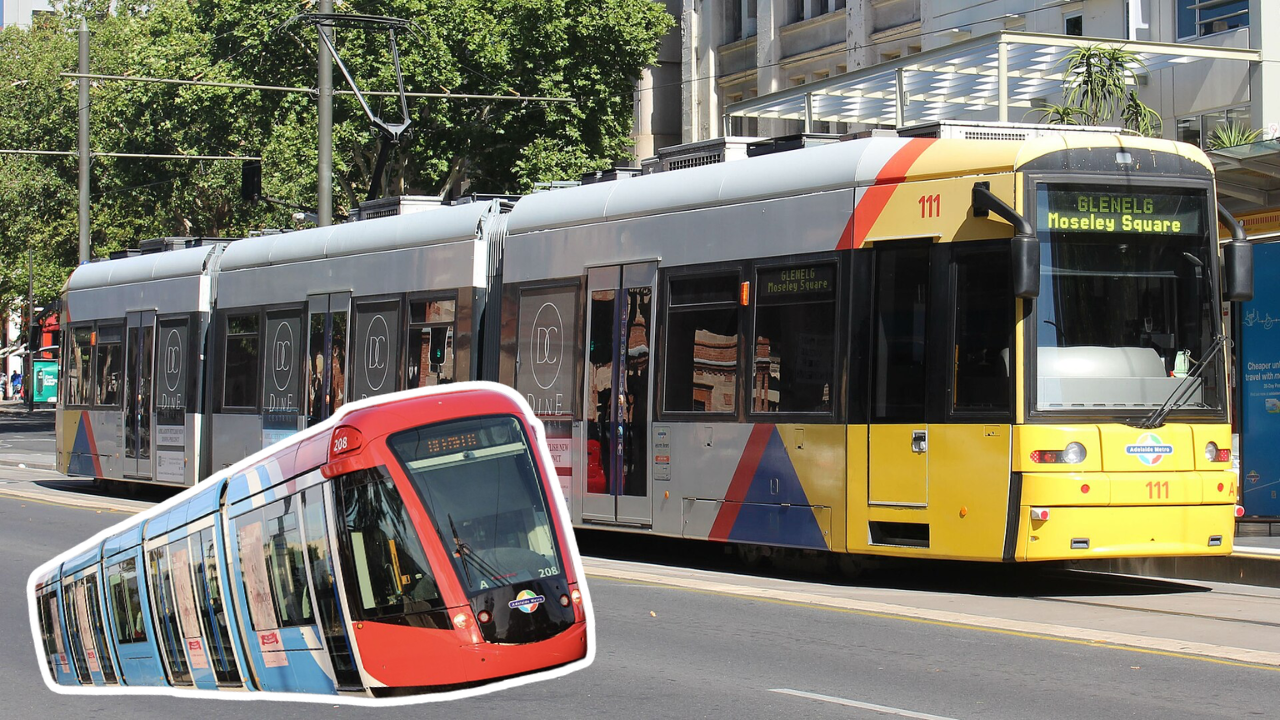
With an election fast approaching, the issue of public transports has remained relatively underdiscussed in a State desperate for tram renewal | Image Credit: Canva.
At its peak, Adelaide was the ‘city of trams’, being home to Australia’s most utilised tramway network, operating 24 lines stretching from Henley Beach in the west, Glenelg in the South, and Burnside in the East.
Instead of having to drive your car, or find a bus, you could come from Mitcham, Prospect, Magill, Clarence Park, Paradise, or even Kensington Gardens into the CBD by tram.
Our obsession with trams grew so much that by 1945 approximately 295 transport trips were being made each year per person – making it the highest per-capita usage of any city – even beating Melbourne.
Yet today Adelaide’s transport network is a relic of the past.
Only three of these lines survive, these are the Glenelg, Festival Plaza and Botanic Gardens lines, with the latter two only being reconstructed in 2007.
So how exactly did a City, which boasted Australia’s most used tramway system, now struggle to even build, yet alone contemplate, a future with public transport?
The City of ‘Trams’
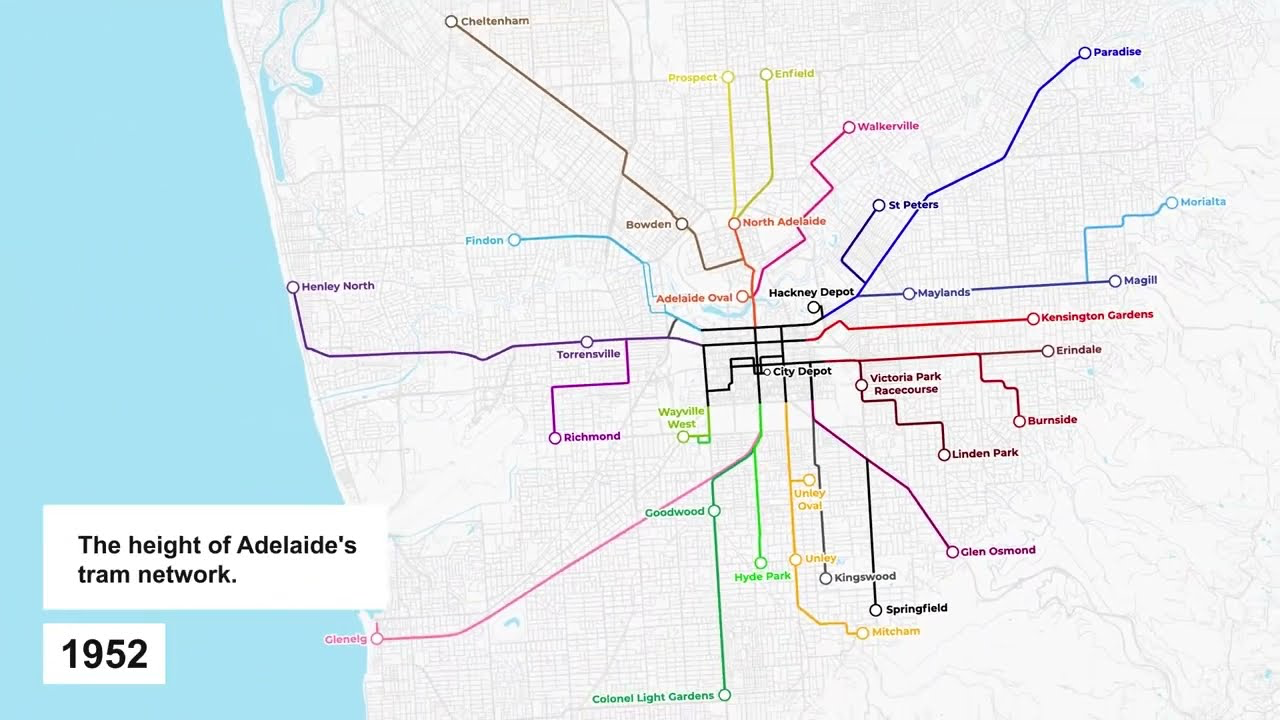
By 1952, up to 24 tramlines were being operated throughout all of Adelaide, connecting suburbs to the city | Image Credit: St Kilda Tramway Museum.
On June 10, 1878, the Adelaide & Suburban Tramway Company launched the city’s first tramway service, a horse-drawn carriage running exclusively from the City to Kensington.
What followed next was an explosion in privately operated horse-drawn carriage services throughout Adelaide.
The Adelaide to North Adelaide line opened in December 1878, a separate line from Port Adelaide to Albert Park in 1879, Adelaide to Mitcham and Hindmarsh in 1881 and then Walkerville in 1882, with further lines to Burnside and Enfield in 1883.
These services were operated by usually two to four horses, approximately going at speeds of 8 km per hour, with double-decker or single deck trams transporting hundreds of people.
However, continuing reliance on horse-drawn carriages (viewed as outdated after invention of electric batteries), resulted in the SA government purchasing all city tramways for £280k ($84mil today) and formation of the Municipal Tramways Trust (MTT).
Established 22 December, 1906, the MTT, led by Chief Engineer W.G.T. Goodman was tasked with the role of transforming Adelaide into a tramway metropolis, with powers to build new and expand existing tramways.
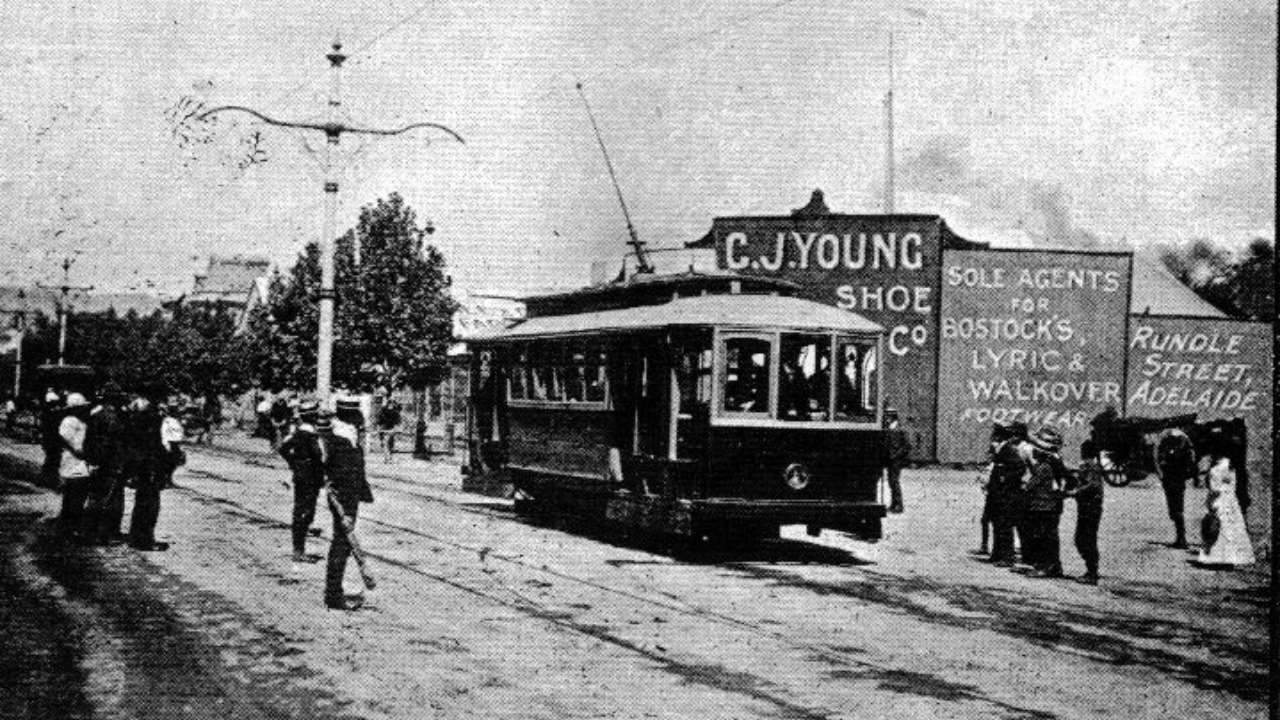
The trial of Adelaide’s first electric tram, November 1908 | Image Credit: Wikipedia Commons.
Between 1907 to 1929, the MTT rapidly expanded Adelaide’s tramways, opening lines as far out as Cheltenham and Colonel Light Gardens, or covering 160km of track and a fleet of 300 trams (including the rollout of the legendary H1 trams).
By 1945, the MTT was collecting fares for 95 million trips annually, representing 295 trips per head of population (approximately 350,000 people lived in Adelaide at the time).
But, a crash on Wall Street in 1929, would fundamentally seal the future of Adelaide’s trams.
How 50 Years of Progress was Destroyed in only 5
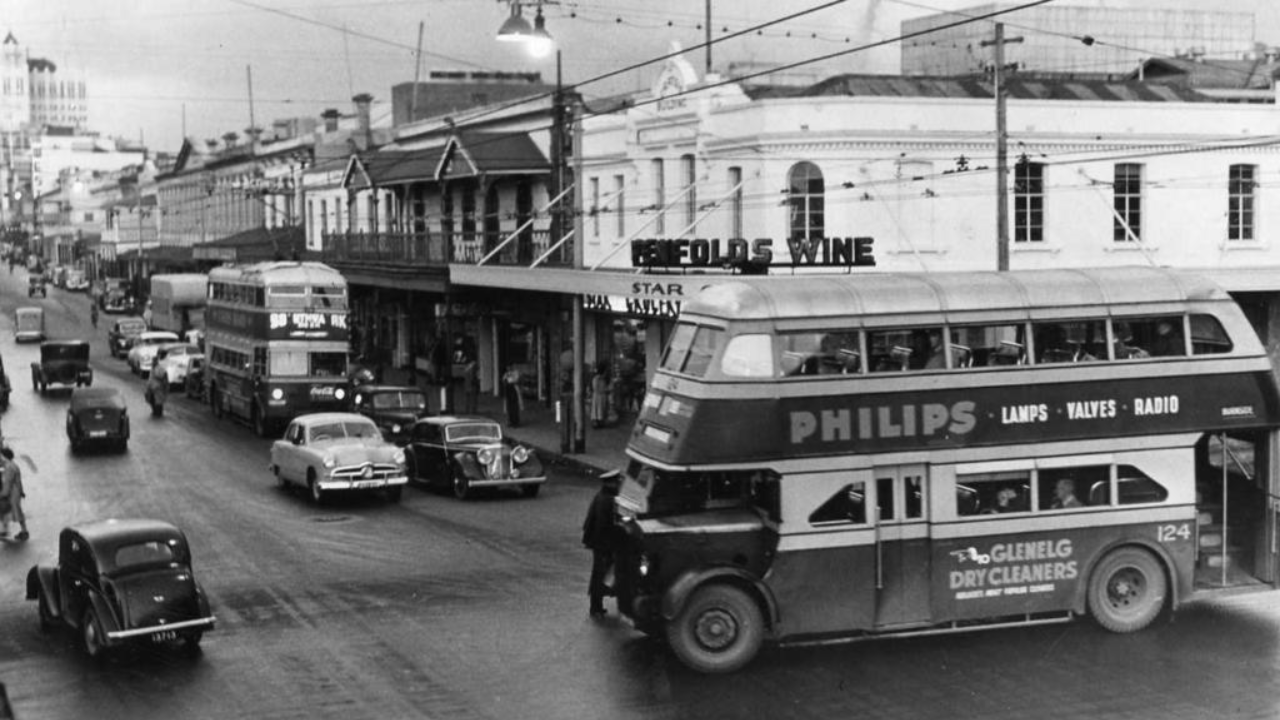
The South Australian government began phasing out trams with trolley buses, before ultimately scrapping the network altogether | Wikipedia Commons.
Up until the end of World War Two, most South Australians were dependent on public transport for their daily journeys.
In fact, up until 1929, the MTT had been rapidly expanding South Australia’s tramway network to include future plans to expand the network, including eventually connecting the Port Adelaide line to Adelaide CBD.
The Great Depression stopped this from happening.
From the offset of the Great Depression all the way until the eventual closure of the network, only one lot of trams was purchased by the MTT, leading to greater congestion issues in coming decades.
These congestion issues were followed by major decay in Adelaide’s tramways. During World War Two, the South Australian government, literally, ran the entire network into the ground and then promptly refused to fund essential repairs after the war’s conclusion.
Trolley buses emerged as a ‘short-term’ replacement, which aided the rapid growth in private car ownership in the 1950s as more and more South Australians turned their nose to the dilapidated trams.
By 1953, increasing road congestion led to the MTT converting the Glen Osmond Line into motor buses, kickstarting the slow disintegration of Adelaide’s trams.
A 1955 report by the Australian Electric Traction Association, exposed “staggering losses” and “mismanagement” by the MTT, including major issues of corruption, leading the newly elected Playford Government to scrap the tram network altogether.
Between 1953 and 1958 the Playford government began a lightning speed process of converting all of Adelaide’s tramways to sealed motorways, literally pouring bitumen over many pre-existing tram tracks.
Only the Glenelg line survived by the skin of its tracks, which conveniently for most part sat independent of many motorways.
The Renaissance That Couldn’t?
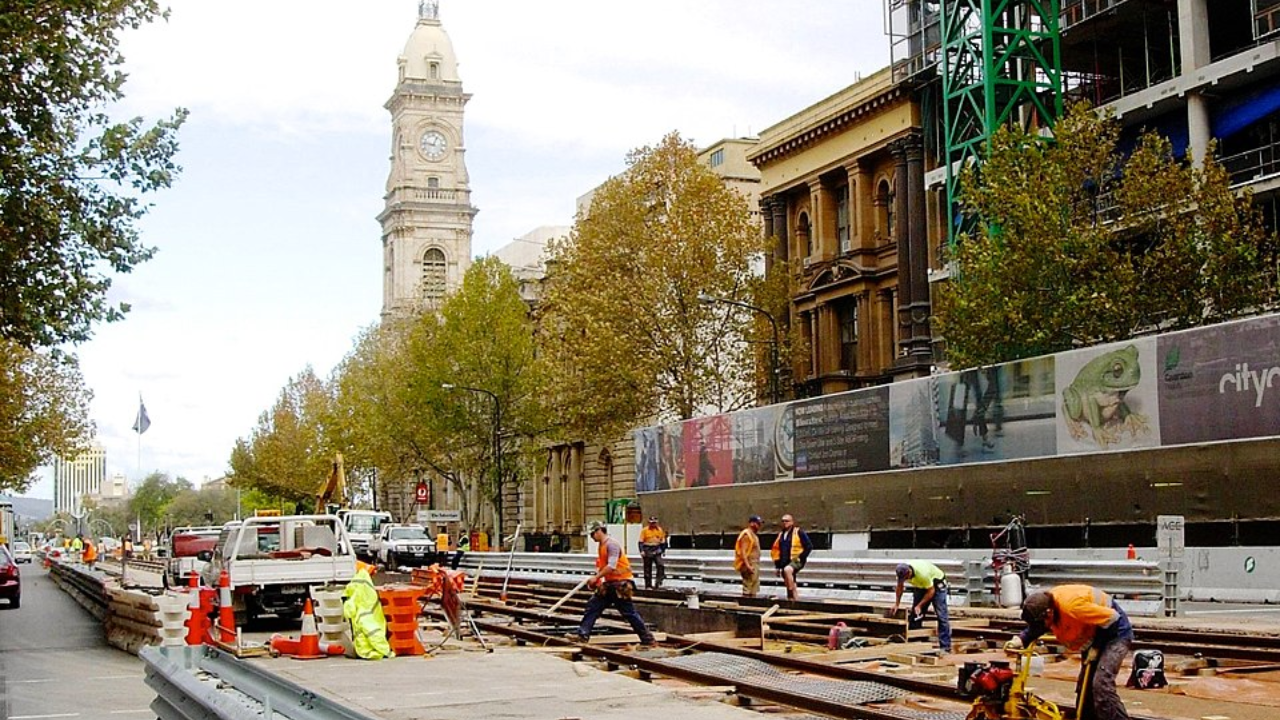
Track construction on King William Street in 2007 during the first extension of Adelaide’s trams in nearly 100 years. | Wikipedia Commons.
Everything changed in 2005 following the approval of a 1.2km extension of the Victoria Square Terminus, which connected the Glenelg Line along King William Street to Adelaide Railway Station.
On 14 October 2007, the extension was opened with two flashy Flexity Classic Trams to showcase the first expansion to Adelaide’s Tramways since 1929 (nearly a century later).
These trams quickly became crowded, with patronage levels going well above pre-upgrade levels, leading to greater public interest to further expand the network.
In the 2008 state budget, the government announced a further 2.8km extension north-west to Adelaide Centertainment Centre (opening March 2010), with calls even within government to extend the line North Adelaide and Prospect.
These calls, made by prominent figures including then South Australian Tourism Minister Jane Lomas-Smith, were labeled ‘impracticable’ and instead a fare-free city loop was later implemented in 2015.
Unfortunately, this ‘Trams Renaissance’ would not last.
Despite further extensions in 2018, which saw the 900m of track extended eastwards to North Terrace, political willpower to extend SA’s trams has since disintegrated.
In the March 2018 state election, the Labor government announced an ambitious policy known as ‘AdeLINK” which proposed five routes radiating from a new city centre loop.
This saw major tramway extensions to Magill, Kilburn, Mitcham, Adelaide Airport, Port Adelaide and a CBD loop.
Labor was defeated, with the Marshall Liberal government prioritising a fiscally conservative approach, rejecting the ‘AdeLINK’ plan and instead focused on limited CBD upgrades and instead privatised many of Adelaide’s public transport assets.
Despite Labor’s comeback in the March 2022 State election (and expected landslide in 2026), it has not committed to any tramway extensions (outside of upgrades to the existing Glenelg Line), with the Liberals preferring 50c fares instead.
The SA Greens are the only party promising any extension, this being the long-awaited Adelaide to Prospect extension.
In retrospect, it seems the so-called renaissance of Adelaide’s Trams remains actually an anomaly in a long-standing decline of what once was Australia’s most utilised public transport system.