
Thunderbolts – A Brief Character Deep Dive
WARNING: May contain spoilers for those who have not yet watched
On the surface, Marvel’s Thunderbolts seems like your typical superhero movie: a group of good guys with powers, a bad guy who wants to destroy them, an epic battle, and of course; the good guys’ win. Cue the happy ending, sunshine, and rainbows 🎉
But this one’s different.
What sets Thunderbolts apart from the usual blockbuster is how emotionally real the characters actually feel.
It’s not just that the actors did a great job showing their emotions (they did), but each character feels like a version of us.
The Thunderbolts are a squad of misfits, anti-heroes, and overall normal people.
Whether it is dealing with loneliness, guilt, insecurity or the pure desperation to be heard and seen, each one of the characters represent something real.
So, let’s meet the squad.

Yelena Belova is the adoptive younger sister of Natasha Romanoff, aka Black Widow. Despite growing up in the same brutal environment, Natasha grows up to be a hero while Yelena takes a different approach. She becomes an elite assassin and now working as a contract killer for Valentina Allegra de Fontaine (Crazy Italian lady who we’ll delve into later in this article).
Key Themes: Loneliness, healing, moving forward
Quick Vibe: Sarcastic, deadly, but quietly craving connection. She’s been through a lot
Why she’s important: Yelena shows us that “you can face your past by building your future”. Her healing isn’t just about her – it’s what allows her to help Bob. She spent so long trying to be what others expected. One day a weapon, the next a soldier. But deep down she was tired of being alone.
Everyone feels alone sometimes, but real growth starts when you let yourself properly feel the emotion, not when you bury it. Your pain doesn’t have to define you, because the person you are when experiencing the pain is not the same person you become at the end of that pain.
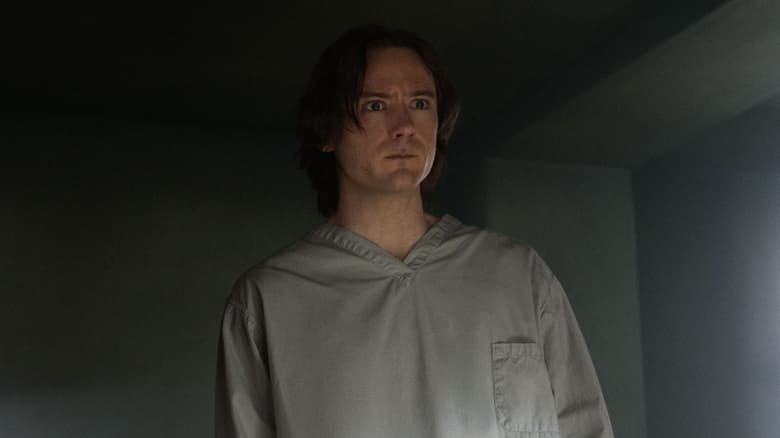
Robert “Bob” Reynolds, once a drug addict with mental health issues was a failed test subject for Valentina’s experiment. After being locked in a vault with his memory almost completely wiped, he joins forces with Yelena and escapes. Later we learn that Valentina has been using him which triggers his own trauma. This leads to the creation of Void, Bob’s dark, villainous alter ego.
Key Themes: Insecurity, depression, trauma
Quick Vibe: Quiet, hurting but still standing, how much the past can control your present.
Why he’s important; Bob’s response to Valentina’s true intentions resulted in him supressing the pain and dwelling on his past to the point that he becomes a different person. However, he also demonstrates that everyone responds to trauma and suffering differently – some ignore it and some find temporary solutions to numb the pain. Whatever the circumstance is, real change starts from within; by confronting your past self. It wasn’t just Bob’s own strength that defeated Void, but the support of the Thunderbolts to help him. At time when you don’t even recognise yourself, it’s only the people around you who can help you move on to new beginnings with new memories.
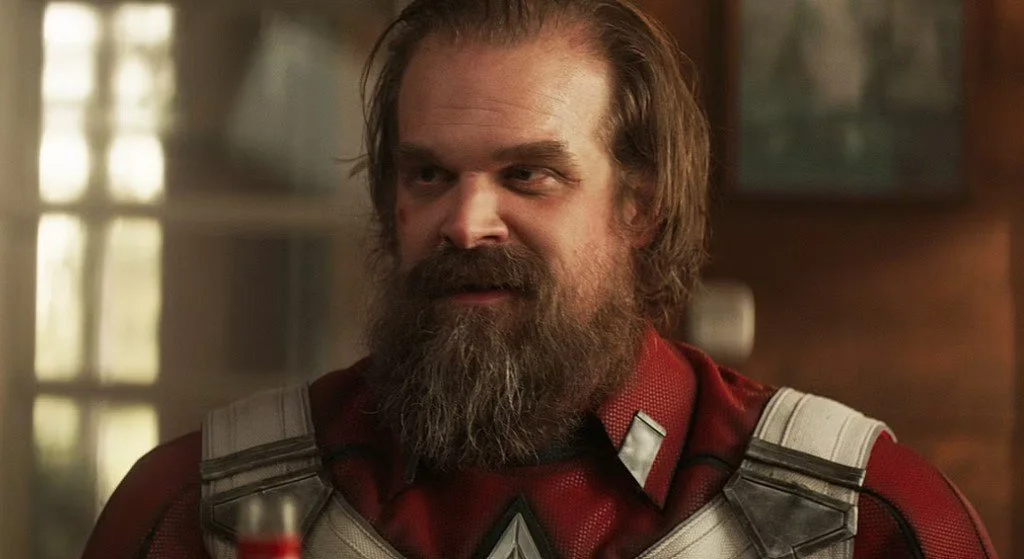
Alexei Andreovitch Shostakov aka “Red Guardian” is the Soviet Union’s first official super soldier and Yelena’s adoptive father (Black Widow 2021). Despite his ego and comedic swag, he is a man longing for redemption and connection.
Key Themes: Fear of irrelevance, redemption and an aging identity crisis
Quick Vibe: Loud and proud on the outside, broken and lost on the inside
Why he’s important: Alexei just wants to get back to his glory days… “Don’t we all want to go back to our prime?”
He represents the tragedy of being left behind when the world moves on. Through the Thunderbolts, Alexei is forced to confront the fact that real strength isn’t about medals or stories — it’s about humility, and showing up for others. His journey is a reminder that being a hero isn’t about the past you cling to, but the people you choose to stand for in the present.

Melisaa Joan “Mel” Gold is Valentina De Fontaine’s assistant at O.X.E. While her backstory and motivations are vague, her hesitation when ordered to kill Bob reveals some internal conflict. She eventually obeys Valentina’s order which speaks volumes about Mel’s position within the O.X.E hierarchy. It’s a clear sign of how deep her loyalty or fear runs, and how little room she must question the morality of the tasks handed to her.
Key Themes: Loyalty vs. self-preservation, the loneliness of being everyone's sidekick but nobody's hero.
Quick Vibe: She covers her insecurities with humour and refuses to be written off.
Why she’s important: Mel is the mirror for what happens when the spotlight fades. She’s proof that survival doesn’t always mean success, and that support roles can still shape the story. Her presence reminds us that not everyone with a past gets a redemption arc, and not everyone behind the scenes is weak. Mel’s loyalty to Valentina may seem like just another job, but it speaks volumes about her ability to adapt, stay useful, and carve out a space in a world that doesn’t care for has-beens.
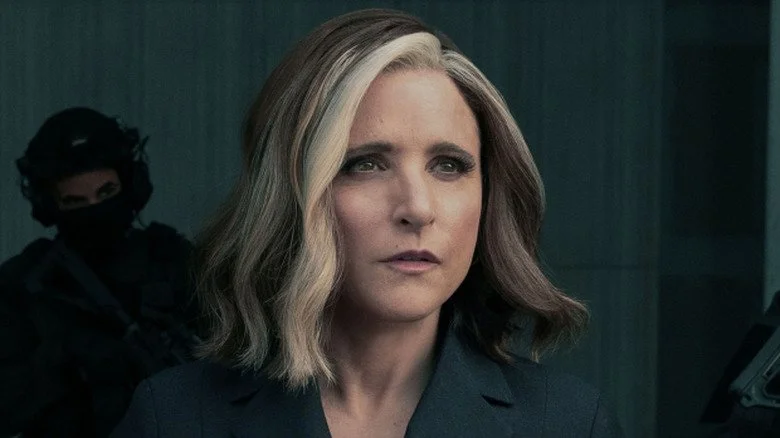
Valentina Allegra de Fontaine is the CEO of O.X.E and CIA director. After facing impeachment over illegal black ops, she orders all traces of O.X.E eliminated. She personally recruited John Walker he lost his position as Captain America and Yelena among others who she is associated with. Valentina has been pulling strings behind the scenes of the global intelligence community for years and her influence reaches far beyond what anyone would suspect.
Key Themes: Trust and manipulation in leadership, the price of ambition
Quick Vibe: Elegant, ruthless and always ten steps ahead. Valentina not only chases relevance but also orchestrates it – even if it means burning everything down.
Why she’s important: Valentina is the embodiment of legacy panic. While Nick Fury assembled heroes to save the world, Valentina is assembling people who’ve already broken it. She represents the uncomfortable truth that power doesn’t always wear a cape.
Final thoughts:
Thunderbolts is a great movie for those who want more than just action. It’s for people who are drawn to the messiness of being human.
We didn’t cover every character, but the ones we explored had the most emotional weight. The characters themselves are far from perfect. They’re multi-layered, complicated, and sometimes very unsure of themselves.
And characters like Valentina and Mel aren’t just supporting players; they’re symbols of a different kind of power. The kind that doesn’t scream.
Things for you to consider:
Do you think Mel was manipulated or just playing along with the CEO?
Which characters do you resonate with? Are there any we didn’t mention in this article?
What kind of power do you respect more – the kind that saves the world, or the kind that controls it from the shadows?